

Just cold air. The most common causes of furnace failure in coastal South Carolina climates that furnace owners run into on the Grand Strand aren’t the ones you read about in guides written for Ohio: down here it is salt corrosion, humidity rust, corroded flame sensors, and equipment that sits idle for most of the year and then gets asked to perform on a thirty-degree morning. We have been chasing those exact failures out of Little River since 1984, and the pattern barely changes from one winter to the next.
Salt Air Corrosion Kills Coastal Furnaces
Salt air is the single biggest reason heating equipment dies young on this coast, and it does damage in places most homeowners never look. Everybody knows salt eats condenser coils sitting outside.
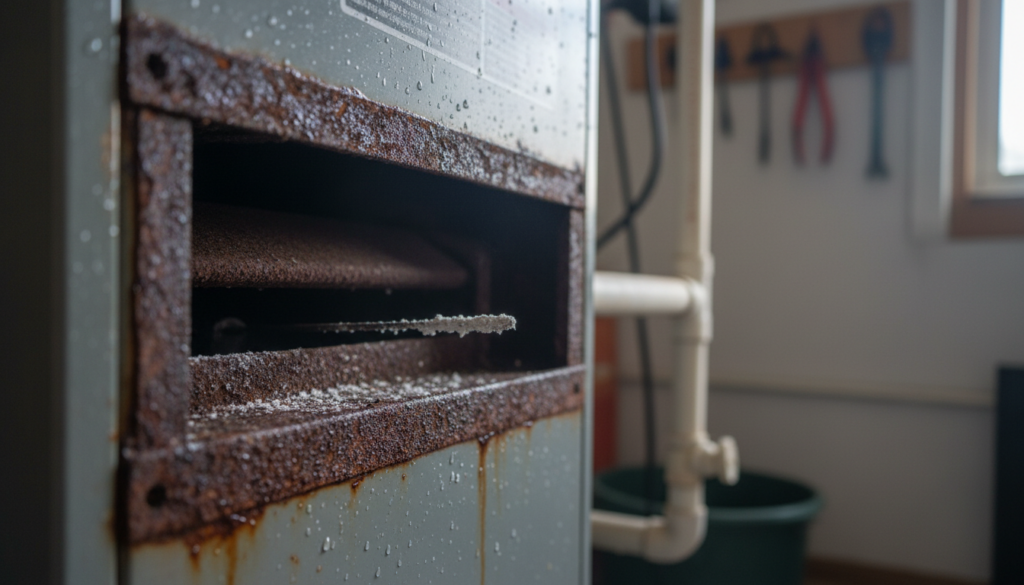
In many cases it gets inside the house, into the garage or crawlspace where the furnace or air handler lives, riding on humid air that never really dries out. It settles on burners, control boards, blower housings, and every screw holding the cabinet together. Then the process starts pulling moisture out of the air and holding it against bare metal, which is essentially a slow-motion battery eating your equipment. The ugly part is that most of this corrosion happens where you can’t see it without pulling panels, so the first sign a homeowner gets is usually a no-heat morning, not a rust streak.
You Can’t Solder Your Way Out of Salt
That Cherry Grove call last December is a good example. The unit was maybe eleven years old, which inland would be middle-aged. We pulled the burner compartment cover and the screws crumbled. Two of our techs stood in that garage arguing about whether the thing was worth repairing.
One wanted to swap the ignitor and send it. The other one ran his thumb along the bottom of the heat exchanger shelf and it came back orange. “You can’t solder your way out of salt,” he said, and he was right. The ignitor was the symptom. The cabinet, the burner rack, and the sensor were all going at once, because corrosion never attacks one part politely and leaves the rest alone.
Being close to the water matters more than people think. A furnace in Longs or Loris, a few miles inland, lives a noticeably easier life than the same unit three blocks off the beach in Crescent Beach or Windy Hill. Same model, same install quality, very different lifespan. We see it constantly.
The Most Common Causes Furnace Techs Find
Nine times out of ten, a coastal no-heat call comes down to a corroded flame sensor, a failed ignitor, a filthy filter, or a blower problem, roughly in that order. The flame sensor is the champion. It’s a thin metal rod that proves to the control board that the burners actually lit, and when salt-laden humidity coats it with oxidation, the board stops believing the flame exists and shuts the gas off as a safety measure. The furnace clicks, lights for three seconds, and dies. Over and over. Homeowners hear it and assume something expensive broke. Usually it is a part you can hold between two fingers.
Clean the Flame Sensor or Replace It?
Whether you clean a flame sensor or replace it outright is a genuinely contested thing, and I will admit our own shop isn’t fully consistent on it. Some techs say cleaning is a band-aid and a corroded sensor should just be swapped.
I have cleaned sensors that ran five more winters without a complaint, and I have replaced brand new ones that fouled again by the next fall because the real problem was the air in that garage. So I am not going to pretend we have a hard rule. On the coast we lean toward replacing, but I would not swear that’s always right.
Ignitors, Filters, and Blower Capacitors
Ignitors fail from age and from power flickers during storm season (hurricane season runs June through November here, and the grid takes hits).
Filters clog faster than inland because Grand Strand humidity makes dust sticky. And blower capacitors weaken in the heat of summer, then quit when heating season asks the motor to start cold. The Cherry Grove unit, for the record, needed the sensor, the ignitor, and eventually a full replacement conversation the homeowner wasn’t ready to have in December.
Humidity, Rust, and the Heat Exchanger
Rust on the heat exchanger is the failure that turns a repair conversation into a safety conversation. The heat exchanger is the sealed metal barrier that keeps combustion gases separated from the air blowing into your rooms. When coastal humidity condenses on it during the long idle months, and salt accelerates the oxidation, the metal thins. A thinned exchanger can crack. A cracked exchanger can let combustion byproducts, including carbon monoxide, migrate into the supply air. That’s why any competent inspection down here includes pulling panels and getting eyes (and often a camera) on the exchanger surfaces, not just checking that the burners light.
Condensate Lines, Flue Pipes, and the Slow Failures
High-efficiency condensing furnaces produce acidic condensate by design, and that condensate has to drain through a trap and line that clog with algae growth in our climate. A blocked condensate line trips a pressure switch and locks the furnace out. The fix is usually clearing the line, but repeated backups corrode the collector box and the inducer housing over time.
Flue piping corrodes too, particularly on older units venting through metal, and a compromised flue has the same carbon monoxide implications as a cracked exchanger. Most furnaces in this area are actually heat pumps with electric backup (gas furnaces are the minority on the coast), but the gas units we do service tend to show exchanger corrosion earlier than the same equipment would inland. There’s also a whole separate conversation about high humidity in crawlspaces and what that does to air handlers, which we aren’t going to get into here.
Why Idle Furnaces Fail in December
Nine months of sitting still does more damage here than three months of running. A furnace in coastal Carolina might fire for the first time since February on a cold morning after Thanksgiving, and everything that corroded, seized, or got webbed over during the idle stretch shows up at once. Spiders nest in burner tubes. Contacts oxidize.
Condensate traps dry out and then clog on first use. So the first cold snap is our busiest heating week of the year, every year, and it isn’t close. Our take, stated plainly: a coastal gas furnace that has never had its burners pulled and brushed is a service call waiting for a date. A fall HVAC checklist exists specifically to fire the system before the weather forces the issue.
Heat Pumps Get Blamed for Furnace Problems
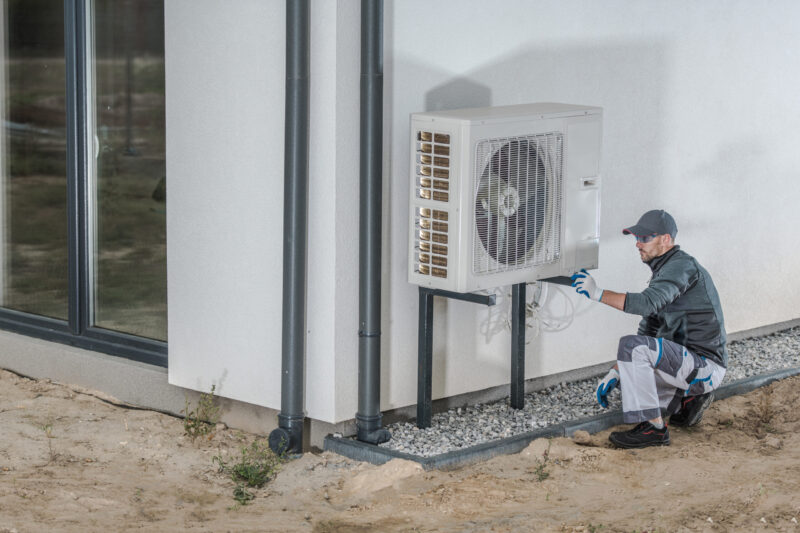
Since most Grand Strand homes run heat pumps, a chunk of our winter “furnace” calls aren’t furnace calls at all. Every hard freeze brings a wave of homeowners convinced their unit caught fire because the outdoor coil went into defrost and threw off a cloud of steam. That’s normal operation. The burning smell on the first cold morning is usually dust cooking off the auxiliary heat strips, also normal, though it should fade within the hour.
What isn’t normal is a heat pump running on those electric strips all winter because the outdoor unit quietly failed back in October, which shows up as a power bill nobody wants to open in January. One customer in Little River ran on strips for six weeks before calling. Nothing about the air coming out of her vents told her anything was wrong. The meter did.
What Short Cycling Actually Means
A furnace that starts, runs a few minutes, and shuts back off gets blamed on the thermostat almost every time. We had a call in North Myrtle Beach last winter where the homeowner had already bought and installed two new thermostats before dialing us. The actual problem was a filter so packed the furnace was overheating and tripping its high-limit switch, which is the equipment protecting itself from its own trapped heat.
Flame sensor failures produce the same start-and-stop pattern for a different reason. The thermostat is almost never the villain. It’s just the only part with buttons on it, so it is the part people replace first.
Common Causes Furnace Owners Can Prevent
Most of the common causes furnace systems quit over on this coast are preventable, and prevention here looks different than it does inland because of the salt-air problem from the first section. That corrosion clock runs whether or not the furnace ever turns on. What actually moves the needle:
Change the filter on a schedule, not a guess. Humid coastal dust loads filters fast. Monthly checks during heavy-use months. Run the heat once in October. Ten minutes of burner time before you need it tells you whether you have a problem while it is still sixty degrees outside. Keep the condensate line clear. A cup of algae in a drain trap locks out more furnaces than most electrical parts do. Get the panels pulled once a year. Cabinet rust, exchanger condition, and sensor corrosion are invisible from the outside. Our maintenance plan is built around two visits a year, spring and fall, for exactly this reason. Actually find your furnace first. No joke. Half the closets and attic platforms we service have the unit boxed in behind beach chairs and Christmas bins, and a filter you can’t reach is a filter that never gets changed. Protect the electronics from storm power. Ignitors and control boards don’t love the voltage swings that come with tropical weather.
That probably reads like a sales pitch for tune-ups. We would say the same thing if we sold none, because the failures we get called out for at night are overwhelmingly the ones on this list.
A retired homeowner in Longs had us out for a fall tune-up last October, mostly, she admitted, because her daughter nagged her into it. Her beagle supervised the whole visit from the garage steps.
Our tech found a flame sensor so corroded it would not have survived the first cold week, swapped it, brushed the burners, and cleared a half-clogged condensate trap. When the freeze hit before Christmas, her heat came on without a hiccup. That’s the whole point of a fall furnace tune-up, and it is the call our Little River shop, Jake’s Heating, Cooling, Plumbing, books most in October: that’s the number her daughter gave her.
By the Jake’s Heating, Cooling, Plumbing Team
Frequently Asked Questions
How long does a furnace last in a coastal South Carolina climate compared to inland areas?
Furnaces in coastal South Carolina typically last 10 to 15 years, compared to the 15 to 20 years commonly cited for inland climates with drier air. Salt-laden humidity accelerates corrosion on burners, heat exchangers, and control boards year-round, even when the furnace is idle during the long cooling season. A unit three blocks from the beach in a community like Crescent Beach or Windy Hill will typically age faster than the identical model installed in Longs or Loris, just a few miles from the water.
Why does a furnace light for a few seconds and then shut off repeatedly?
A furnace that lights briefly and then shuts off in a repeating cycle is almost always responding to a failed flame sensor signal. The flame sensor is a small metal rod that confirms to the control board that the burners are lit. In coastal climates, salt humidity coats the rod with oxidation, and the board interprets the weak signal as no flame, cutting the gas as a safety precaution. Cleaning or replacing the sensor resolves the symptom, though persistent fouling may point to corrosive conditions in the space where the furnace is installed.
Is a cracked heat exchanger on a coastal furnace a safety issue or just a repair issue?
A cracked heat exchanger is a safety issue, not simply a repair item. The heat exchanger is the sealed metal barrier separating combustion gases from the air circulated into living spaces. When coastal humidity and salt accelerate oxidation over the furnace’s idle months, the metal thins and can crack, creating a path for combustion byproducts including carbon monoxide to enter supply air. Any furnace inspection in a coastal South Carolina home should include a visual or camera examination of the exchanger surfaces, not just a burner function check.
What causes a high-efficiency furnace to lock out and stop working in a humid coastal climate?
A blocked condensate drain line is a common lockout cause for high-efficiency condensing furnaces in humid coastal climates. These furnaces produce acidic condensate as part of normal operation, and the drain trap and line that remove it are prone to algae growth in warm, humid conditions like those on the Grand Strand. When the line clogs, a pressure switch detects the backup and shuts the furnace down as a safety measure. Clearing the line typically restores operation, but repeated blockages suggest the line or trap needs a more thorough cleaning or a preventive maintenance schedule.